
Menopause Face: When You Don’t Recognize Yourself — and How to Get Back to You
Interview with Amber Lewis, Owner & Lead Aesthetician / Cosmetic Injector / Surgical Assistant / Medical Assistant
As more women search for answers about “menopause face,” it’s becoming clear that the changes we experience during menopause go far beyond fine lines or dry skin. These shifts are structural, layered, and often surprising — and many women feel unprepared for how quickly they appear. In this conversation, Amber from Luminous Medical Aesthetics explains what’s really happening beneath the surface during menopause and how a thoughtful, layered approach to treatment can help women feel like themselves again.
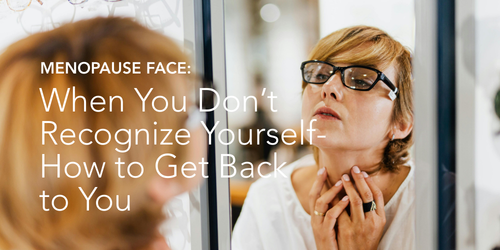
People are now literally searching for “menopause face.” How does menopause affect facial structure, skin texture, and overall appearance as estrogen drops and collagen production slows?
One of the biggest misconceptions is thinking it’s just your skin. It isn’t. It’s the scaffolding under the skin — every single layer of the face — all changing at the same time. It’s very unfair, because it’s not just one thing, which is why it can feel so sudden.
Within the first four years of menopause, we lose an additional 30% of our collagen. Every year after that, we lose another 2–3%, and that doesn’t even include stress, dieting, weight changes, or overall health. All of these deeper structural changes show up on the skin because the skin thins, and everything becomes more visible. So when people say, “I woke up and suddenly looked older,” it’s because multiple layers shifted at once.
Is collagen loss what causes the facial volume loss many women notice during menopause?
No — the main cause of facial volume loss is bone loss. As we age, we lose bone in our face just like we lose bone in the rest of our body. We also lose muscle, and our fat pads start to separate from where they originally sat because the structure that held them in place is no longer strong enough.
Everything shifts downward. The upper scaffolding weakens, and the lower face takes the hit. The thinning skin makes the changes even more obvious. So it’s not just collagen — it’s bone, muscle, fat pads, and skin all working together.
What treatments do you recommend to address menopause face — including bone density loss, volume loss, and skin changes?
Honestly, all of it. Menopause face requires a layered approach because the aging is layered. When we replace the layers that have changed — bone, fat pads, muscle tension, collagen — we aren’t changing who you are. We’re restoring what naturally used to be there.
Fillers can replace lost structure without making someone look different. When placed correctly, they simply restore your face to its original architecture. Micro-needling, chemical peels, collagen induction therapy — they all play a role because each one treats a different layer.
If you only treat one area, it can look obvious. But when we treat the whole face appropriately, everything communicates and looks cohesive.
What changes do you see most often in women’s faces after menopause, especially active women here in Colorado? How do these changes affect confidence?
The number one thing I hear is, “I don’t look like myself.” Or, “I look like my mom,” and I say that with love — I’m a mom — but people don’t feel like themselves anymore.
Part of my consultation is figuring out what you think looks like you. What are the features that define your sense of self? What has changed so much that you no longer recognize yourself?
We’re all out in our communities, working, socializing, on social media — we want to feel like the person we believe we are. Treatments should restore that, not change it.
Colorado’s climate is brutal on mature skin. How does menopause-related skin texture interact with our environment?
Colorado weather and menopause are two separate challenges that stack on top of each other. Even a 10-year-old can struggle to thrive here because our elevation and dryness attack the skin daily.
When you add menopause — where the skin becomes thinner, less elastic, and slower to repair — everything becomes more noticeable. That’s why texture becomes such a concern.
You can only put on so much lotion. The solution isn’t “more cream” — it’s stimulating the skin to behave like healthy skin again. Micro-needling, chemical peels, collagen induction therapy, plus products that protect the skin from this climate, are essential.
Why do you think most med spas avoid talking about menopause directly, even though everyone is searching for terms like "menopause face"?
I really don’t know. I think there’s still some shame in the industry around aging. Everything is “anti-aging,” “look youthful,” “erase wrinkles.” But the truth is — we are aging. And we should feel lucky that we get to age.
Menopause is something women go through together. We don’t turn into trolls who disappear from society. We’re mothers, CEOs, community leaders — we’re more powerful than ever.
I focus on aging, not anti-aging. How do we support the aging process and keep people healthy and confident? That’s the real work.
Many women are using HRT to manage menopause symptoms. How does hormone replacement therapy affect the face or the results of aesthetic treatments?
HRT acts like an environmental stabilizer. It tells your body, “We’re okay — we’re not going to accelerate aging as quickly.” But even with HRT, you’re still aging. It’s protective, not restorative.
HRT doesn’t rebuild bone. It doesn’t restore fat pads. It doesn’t thicken skin that has already thinned. It doesn’t undo decades of sun exposure. What it does do is preserve the results of aesthetic treatments — it’s like a warranty. You still need the scaffolding work, but HRT helps maintain it.
GLP-1 medications (Ozempic, Wegovy, Tirzepatide) are exploding in popularity, especially among menopausal women dealing with weight gain. How are these medications affecting what you see in your practice?
They can be wonderful tools for many people, especially when weight has felt out of their control. But just like with HRT, GLP-1s are protective, not restorative.
When we lose weight, especially quickly, we lose fat pads that are keeping the skin lifted and tight. But the skin itself can’t bounce back the way it used to — we’re no longer producing enough collagen or elasticity to shrink that skin back down. So even though people feel healthier, they may look older because the scaffolding underneath is gone.
GLP-1s are also proven to accelerate bone loss. So again, the face pays for it.
My clients share exactly what you described: “I’m happier with my weight, but overnight I realized how old I look underneath.” That’s very common, and there’s no shame in talking about it.
We treat the face — but we also treat areas like the neck, inner thighs, underarms, anywhere the skin was stretched and no longer rebounds. It’s all connected.
I'd love to talk to you about how we can get you looking fresh and fabulous. Book a complimentary consultation.


